

- Creating a Fairplay Login: What the Registration Path Usually Includes
- Where the Login Form Is Usually Found on Web and Mobile
- Inside My Fairplay Area: Typical Places for Bets, Transactions, and Profile
- When Login Fails: Password, Browser, OTP, or Security Flags
- Before Trying Again
- Anti-Phishing Rules for Fairplay Users in India
- Faster Support Escalation: A Message Template That Saves Time
- Staying Signed In: Convenience vs Security on Personal Devices
- FAQ
18+ Only. Gamble responsibly. Verify current access details, terms, and account rules in the official Fairplay source before signing in.
Creating a Fairplay Login: What the Registration Path Usually Includes
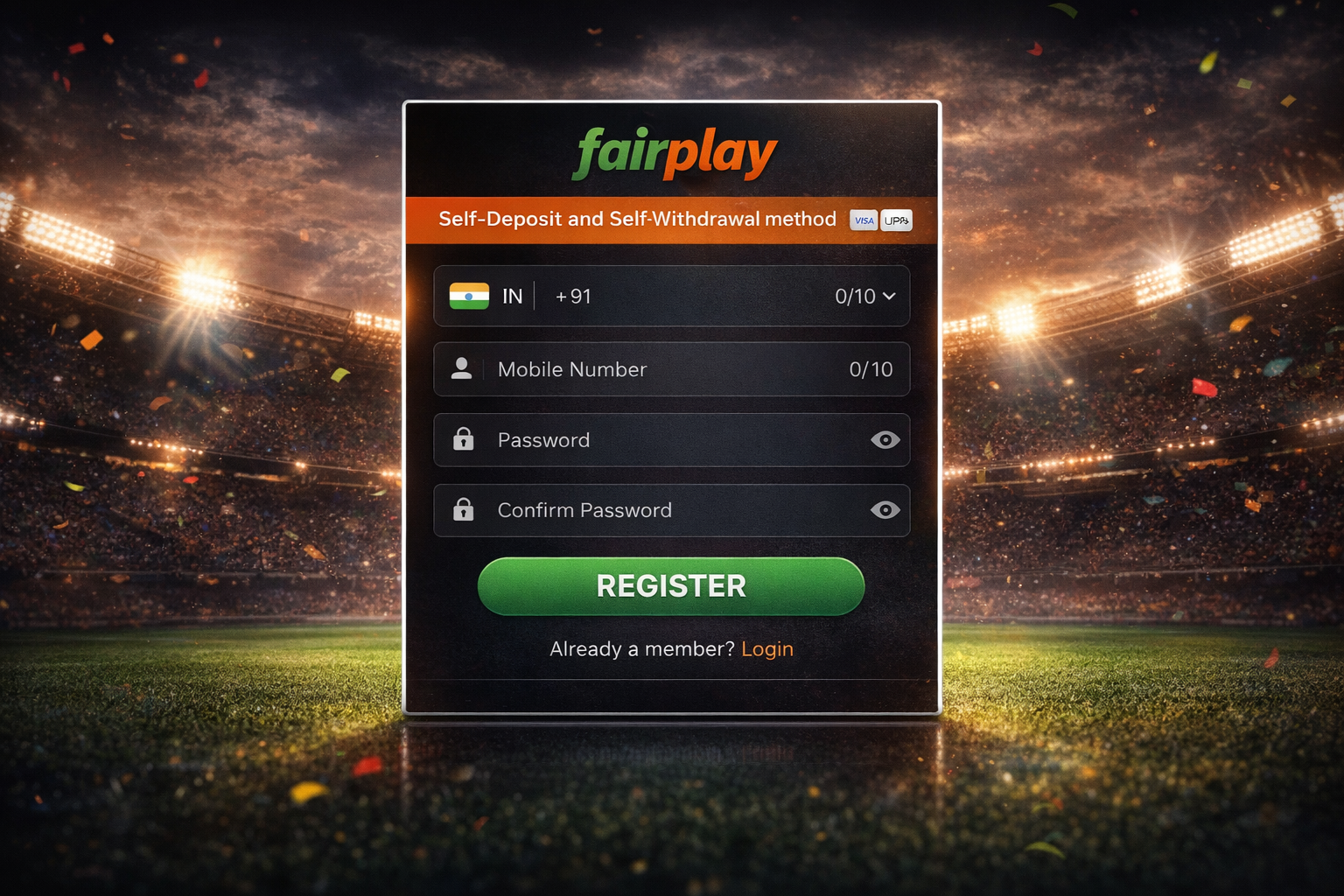
The registration flow is usually simple. Users first look for a Sign Up or Register option, then move through a short setup path.
A typical path often includes:
- Open the verified Fairplay entry point.
- Find Sign Up or Register near the main access area.
- Enter the basic details requested in the form.
- Complete a confirmation step, if that step is present.
- Create a password.
- Finish the first fairplay login.
Some users search for this step through phrases like fairplay login id sign up. The label may vary, but the core idea is the same: use a verified page and complete the registration only there.
Verification or KYC may be required at some stage. If that is not clearly shown in the current flow, users should check the platform’s Terms, rules, or KYC section instead of assuming it is mandatory at registration.
Where the Login Form Is Usually Found on Web and Mobile
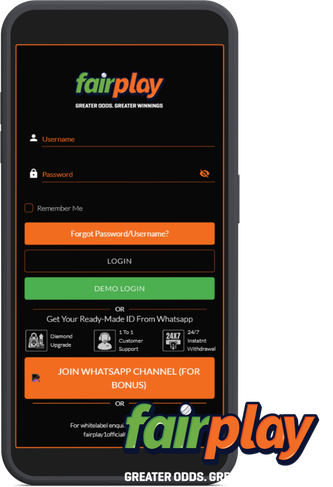
On web and mobile, the Login button is usually placed in a top bar, header area, side menu, or account corner. On smaller screens, it may sit inside a menu icon instead of the main page header.
The form itself usually asks for:
- Login or ID
- Password
In some cases, an OTP or confirmation code may appear as part of access or recovery. That is a possible scenario, not a guaranteed one.
Users searching fairplay 24 login should focus on page trust signals first. The main risk is not the form layout. The main risk is landing on the wrong page.
Inside My Fairplay Area: Typical Places for Bets, Transactions, and Profile
Once signed in, users usually look for the account area to review activity and settings. The exact menu names may differ, so it is safer to speak in general terms.
Typical sections in My Fairplay may include:
- My Bets
- History
- Transactions
- Statements
- Profile
- Settings
A user who enters through my fairplay a currently active Fairplay account page will often expect these areas to be grouped in one account zone.
The exact wording can change. Users should follow the current navigation instead of relying on old screenshots or copied instructions.
When Login Fails: Password, Browser, OTP, or Security Flags
Sign-in problems usually fall into a few common groups. The fastest fix depends on knowing which group is most likely.
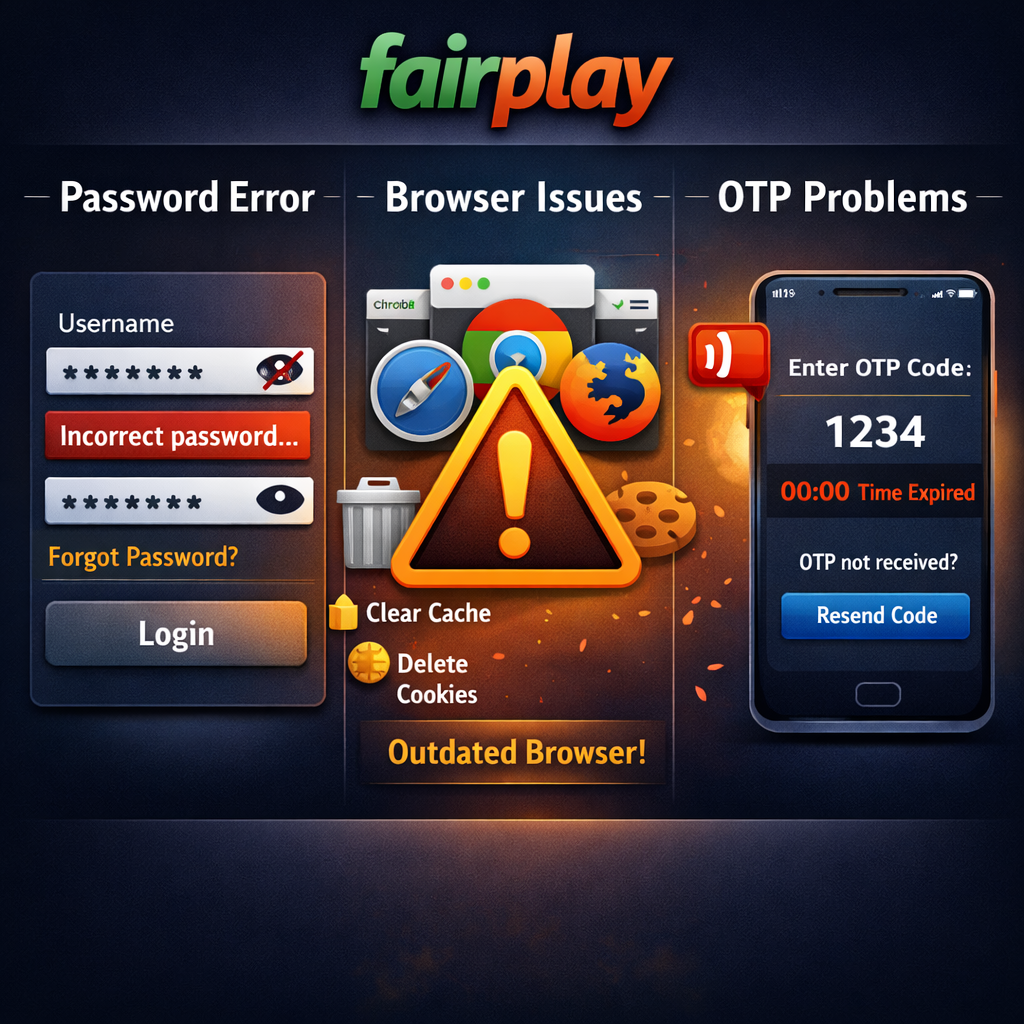
Wrong password or temporary lock
A mistyped password is the most common cause. Repeated failed attempts can also trigger a temporary block or warning.
This is more likely when users switch between saved credentials, browser autofill, and manual input.
Confirmation code does not arrive
If the current flow uses a code, the message may be delayed or blocked. That can happen because of network issues, session conflicts, or a page problem.
A missing code is a possible scenario, not a universal feature of every Fairplay login flow.
Browser, cache, or cookie conflict
Old cache, broken cookies, or a browser extension can stop a page from loading correctly. In those cases, the login form may open but not submit properly.
This also affects users who move between fairplay online in browser and the Fairplay app.
Security flag or restricted access
A login can fail because the system detects unusual activity, repeated attempts, or a suspicious environment. A copied page may also imitate a normal error and keep asking for credentials.
That is why source verification matters before every retry.
Before Trying Again
Use this checklist before another sign-in attempt:
- Check keyboard layout and letter case.
- Re-check the login or ID.
- Refresh the page.
- Clear cache and cookies.
- Disable conflicting browser extensions.
- Check the network connection.
- Confirm the domain and watch for phishing signs.
This short reset solves many normal login failures without turning the process into repeated risk.
 Hot games
See all →








Anti-Phishing Rules for Fairplay Users in India
Users in India often deal with mirror links, clone pages, and copied interface designs. That makes account safety part of the login process itself.
Use this checklist every time:
- Verify the domain carefully before any fairplay login.
- Confirm that HTTPS is active.
- Do not sign in through links from chats, groups, or messengers.
- Use contact details only from verified account or support sections.
- Never share OTP codes or passwords.
- Treat copied interfaces and strange redirects as warning signs.
- Be extra cautious with pages that mix brand phrases like fairplay pro, without clear trust signals.
Search phrases do not prove authenticity. A page can look polished and still be a clone.
Faster Support Escalation: A Message Template That Saves Time
When normal troubleshooting does not help, a clear support message saves time. Support may be available around the clock on some platforms, or that may be claimed in platform materials, but users should rely on the current verified support channel.
Use a short template like this:
Hello, I cannot access my Fairplay account.
Login/ID: [your login ID]
Time of last login attempt: [date and time]
Error shown: [exact text or short description]
Device: [phone model or desktop]
OS: [Android / iOS / Windows / other]
Browser or app version: [browser name or app build, if visible]
Network type: [Wi-Fi / mobile data]
Screenshot attached: [yes/no]
Transaction or ref ID: [only if the issue is linked to payment or cashier activity]
This structure helps support identify whether the problem is account-related, browser-related, or linked to a payment event.
Popular Games
Staying Signed In: Convenience vs Security on Personal Devices
Staying signed in can be reasonable on a personal phone that has screen lock protection, current updates, and controlled access. Convenience matters, but only when the device itself is secure.
Safer conditions for keeping a session active include:
- Personal device only
- Screen lock enabled
- Biometrics enabled, if available
- No shared access
- No suspicious browser behavior
It is better to sign in again when:
- The device is shared
- The browser saves passwords too aggressively
- The phone is used on public or unsecured networks
- The user no longer trusts the page that opened the session
Always log out on shared devices. Be careful with automatic password saving if the browser or device is not fully trusted.